ASEVA congratulates Ana Borrás for her remarkable contribution to the book Advances in Nanostructures

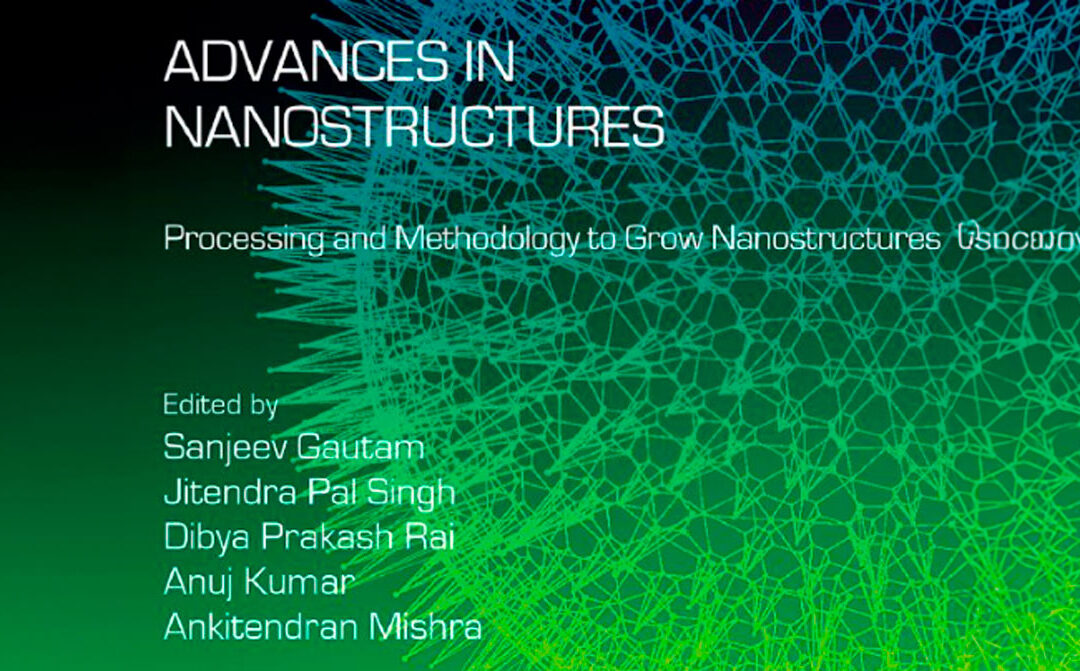
ASEVA congratulates Ana Borrás for her remarkable contribution to the book Advances in Nanostructures

We are proud to announce that Ana Borrás, one of our esteemed board members, has co-authored the chapter Nanostructures for Energy Harvesting in collaboration with renowned experts Swati Panda, Sugato Hajra, R. Rakesh Kumar, K. Uday Kumar, Yogendra Kumar Mishra, and Hoe Joon Kim.

This chapter delves into innovative nanostructures and their applications in sustainable energy solutions, showcasing the importance of advanced research in pushing forward the frontiers of technology.

Check out the book here: Advances in Nanostructures

We are extremely proud to have Ana as part of our team and congratulate her on this outstanding achievement.

70th anniversary of CERN in Spain

70th anniversary of CERN in Spain

Organized by the Ministry of Science, Innovation and Universities, the Consejo Superior de Investigaciones Científicas (CSIC), the Centro de Investigaciones Energéticas, Medioambientales y Tecnológicas (CIEMAT), the Centro Nacional de Física de Fículas, Astropartículas y Nuclear (CPAN), the Agencia Estatal de Investigación (AEI), the Centro para el Desarrollo Tecnológico e Innovación (CDTI) and the Fundación Española para la Ciencia y la Tecnología (FECYT), this event commemorates the 70th anniversary of CERN in Spain. It will take place before the official celebration ceremony, scheduled for October 1st at CERN.

AGENDA

09:00 – Welcome

09:45 – Opening speech
CERN Directorate (TBC)

10:30 – Video: History of CERN: Celebrating 70 years.
A journey through the history, present and future of Spain’s participation in CERN.

11:00 – Coffee break

11:30 – Unveiling the fundamental laws of nature at CERN: past, present and future.
Round table and debate

12:30 – Spain’s role in CERN’s technological developments and their impact on society
Round table and debate

13:30 – Closing
General Secretariat for Research, MICIU

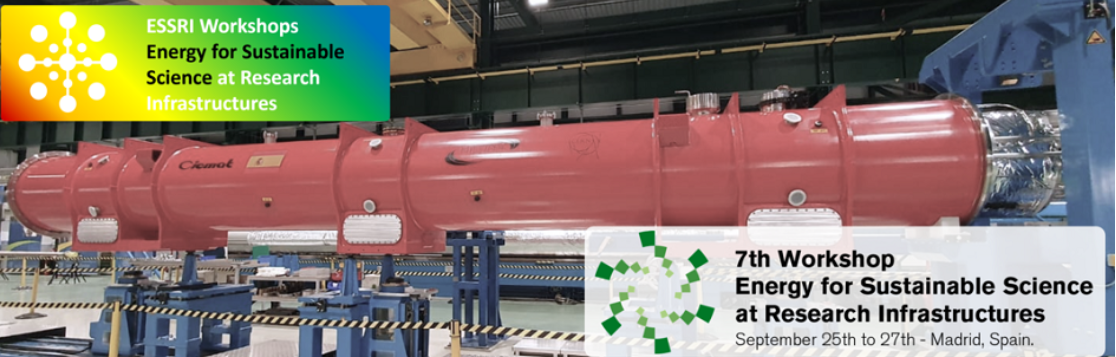
ESSRI, Energy for Sustainable Science at Research Infrastructures

ESSRI, Energy for Sustainable Science at Research Infrastructures

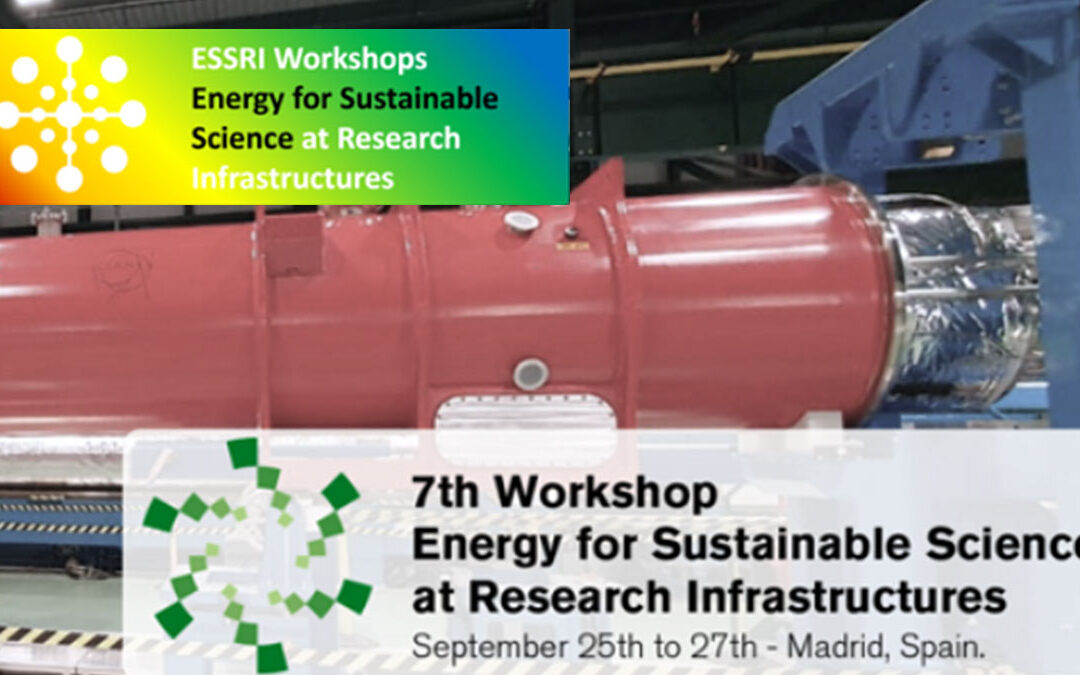
CIEMAT, in collaboration with CERN, ESRF, DESY, PSI, ESS and ERF, will organize the Seventh Workshop on Energy for Sustainable Science in Research Infrastructures in Madrid on September 25-27, 2024. This event follows the tradition of previous workshops organized by ESS (2011), CERN (2013), DESY (2015), ELI-NP (2017), PSI (2019) and ESRF (2022).
The objective of the workshop is to identify technical and strategic challenges to develop and implement sustainable solutions in research infrastructures. Topics such as energy management, exchange of experiences on energy efficient technologies, sustainability in current research projects and life cycle analysis of these infrastructures will be addressed. In addition, the participation of PhD students will be encouraged in order to involve young researchers in these key issues for the future of sustainable science.

Those interested can register at the following link:

Light-Matter Interaction at Nanoscale

Light-Matter Interaction at Nanoscale

IQF Blas Cabrera, CSIC Serrano, Madrid 23rd – 25th September 2024

Join us in Madrid for the second edition of the biennial LMI meeting, aiming to discuss recent progress and future perspectives on the captivating world of experimental and theoretical photophysics and photochemistry of low-dimensional structures. We are looking forward to bring together experts on light-matter interactions at the nanoscale investigated by scanning probe microscopies (SPM). This encompasses from the latest technical developments on advanced tip enhanced spectromicroscopies (TERS, Electro and Photoluminescence) to ultrafast (pulsed sources, THz-STM) phenomena in quantum dots or single molecules within plasmonic nanocavities. This convergence promises a stimulating environment for students, postdocs and world-renowned scientists to collectively explore the frontiers of the field!

Survival of an Antarctic cyanobacterial mat under Martian conditions

Survival of an Antarctic cyanobacterial mat under Martian conditions

Author: Martin-Andres, I., Sobrado, J. , Cavalcante, E. ; Quesada, A; 

Front. Microbiol. Volume 15 – 2024 | https://doi.org/10.3389/fmicb.2024.1350457

Abstract:
Antarctica is one of the most outstanding analogs of Mars, and cyanobacterial mats are considered one of the most resilient biological consortia. The purpose of this study is to find out the effect of the Martian conditions on an Antarctic cyanobacterial mat. We exposed an Antarctic microbial mat to Martian conditions in a simulating chamber (MARTE) for 15 d and investigated the variations in the consortium by the use of 16S rRNA gene expression as an indicator of the biological activity. Metabarcoding using the V3-V4 regions of the 16S rRNA gene was used to determine the succession of the active members of the microbial consortium during the experiment. The results showed that the microbial mat, far from collapsing, can survive the stringent conditions in the simulating chamber. Different behaviors were displayed depending on the metabolic capabilities and physiological characteristics of every taxon. The main conclusion is that the Martian conditions did not impair growth in some of the groups, and thus, the investigated Antarctic community would be able to survive in a Martian environment at least during the short experimental period, although elements of the community were affected in different ways.

The 9th European Nanomanipulation Workshop

The 9th European Nanomanipulation Workshop

Dear colleague,

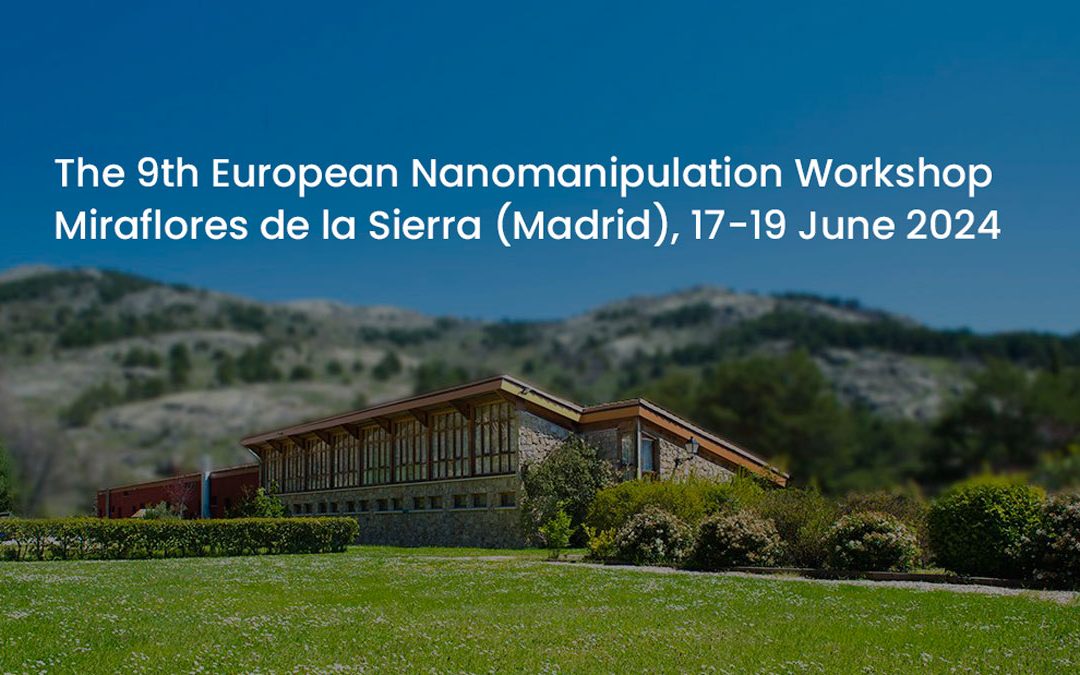
We are pleased to announce the 9th European Nanomanipulation Workshop will be held in La Cristalera, Madrid (Spain) from June 17th to 19th 2024.

The overall focus of the series of the Workshops is to bring together scientists who are active in the field of controlled manipulation of atoms, clusters, molecules and other nanoscale objects using scanning probe or other related techniques. This includes basic techniques of manipulation, theoretical description of manipulation processes as well as applications ranging from nano- and mesoscale friction to automatic assembly of nano-objects.The program will try to reflect the wide range of topics that define the nanomanipulation community.

This event follows the 1st Workshop in Cascais (Portugal), 2nd in Tartu (Estonia), 3rd in Madrid (Spain), 4th in Kraków (Poland), 5th in Mulhouse (France), 6th in Giessen (Germany), 7th in Jena (Germany) and 8th in Krakow (Poland).

We invite you to join us to learn the latest advances in this multidisciplinary field while enjoying an incomparable natural landscape.

Important dates

Abstract submission: From February 26th, abstract submission is open only for poster communications.

Registration: from March 15th 2024 to April 15th 2024 (please, register early to reserve your spot, attendance limited to 90 people)

Conference: from June 17th to June 19th 2024

 
On-Surface Synthesis International Workshop (OSS24)

On-Surface Synthesis International Workshop (OSS24)

On-surface synthesis, a surface-supported variation of organic chemistry most commonly performed under vacuum, unites the easy tunability of molecular materials and the promises of self-assembly as a revolutionary production method, with the sturdiness of covalently bonded structures. This most attractive combination is drawing the interest of a rapidly increasing number of researchers. Important efforts are being devoted to augment the available on-surface synthesis toolbox, to improve our understanding of the chemical reaction mechanisms, to the synthesis and characterization of new molecular architectures, as well as to their implementation in diverse applications.
Because this approach bridges across the fields of chemistry, physics and materials science, further involving engineering for the integration of these molecular materials in actual devices, the aim of this fifth edition of the “On-Surface Synthesis” international workshop (following OSS14 in Les Houches, OSS16 in San Sebastian, as well as OSS18 and OSS22 in Sant Feliu de Guíxols) is to bring together researchers working in this field from different perspectives, theory and experiment, as well as with chemical, physical and/or application-oriented viewpoints.

Soft Skills Seminar Series

Soft Skills Seminar Series

Dear Colleague,

we are excited to announce the “Fuerzas y Túnel Soft Skills Seminar Series”.
This online seminar series aims to enhance crucial skill sets of emerging talents in our research community.
These seminars will be imparted online on three consecutive Wednesdays (7, 14, and 21 of Februrary) at 11:00 CET, each lasting for 1h 30min. All courses will cater specifically to doctoral students or post-docs. In what follows we outline each of the topics covered.
Please, register early to reserve your spot, attendance limited

MAIN TOPICS

  • Scientific Writing: It provides indispensable tools and a strategic mindset for crafting impactful research papers. Gain insights into publication processes, peer review intricacies, and master the nuances of grammar and structure. Learn to communicate complex ideas with clarity and precision.
  • Speak about Science – Oral Presentation Skills for Researchers: To improve your ability to prepare and deliver compelling scientific presentations. Sharpen your communication skills to engage audiences across diverse expertise levels in your field.
  • Equality and Diversity in the Workplace: Addressing persistent challenges in gender equality within scientific and academic domains, this session aims to address these issues to ensure they do not hinder success.
Direct in-situ insights into the asymmetric surface reconstruction of rutile TiO2 (110)

Direct in-situ insights into the asymmetric surface reconstruction of rutile TiO2 (110)

Author: Wentao Yuan, Bingwei Chen, Zhong-Kang Han, Ruiyang You, Ying Jiang, Rui Qi, Guanxing Li, Hanglong Wu, Maria Veronica Ganduglia-Pirovano & Yong Wang

Nature Communications volume. Article number: 1616 (2024) 

Abstract:
The reconstruction of rutile TiO2 (110) holds significant importance as it profoundly influences the surface chemistry and catalytic properties of this widely used material in various applications, from photocatalysis to solar energy conversion….